Introduction
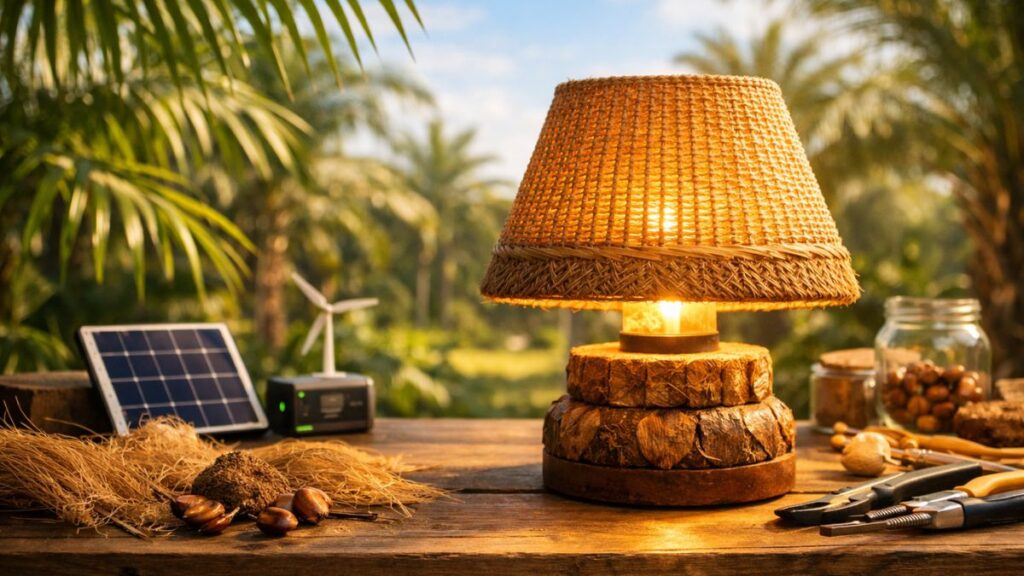
The oil palm lamp project existing in many sustainability initiatives highlights an innovative approach to solving two global challenges at once: agricultural waste management and access to affordable lighting. Oil palm plantations produce vast quantities of biomass waste every year. Instead of letting these materials go unused, engineers and environmental innovators have started transforming palm waste into practical products such as eco-friendly lamps.
These projects focus on converting palm fibers, shells, and residues into sustainable lighting solutions for rural communities. As a result, the concept is gaining attention among environmental researchers, renewable energy advocates, and social entrepreneurs.
In this guide, we will explore how these projects work, why they matter, and how they can contribute to sustainable development and energy access.
What Is an Oil Palm Lamp Project?
An oil palm lamp project is an initiative that uses waste materials from oil palm plantations to create environmentally friendly lighting solutions. These projects typically focus on recycling palm biomass and turning it into lamp structures or fuel sources for lighting devices.
Key Goals of the Project
Most projects share similar objectives:
-
Reduce agricultural waste
-
Provide affordable lighting solutions
-
Support sustainable rural development
-
Encourage circular economy practices
-
Promote renewable or biomass-based energy
Because oil palm plantations produce large amounts of by-products, they present an ideal opportunity for sustainable product innovation.
Why Oil Palm Waste Is Ideal for Sustainable Lighting
Oil palm agriculture generates several types of waste materials. Instead of burning or discarding them, many sustainable design projects now reuse these materials to produce eco-friendly lighting devices.
Common Oil Palm By-Products Used
| Oil Palm Waste Material | Typical Use in Lamp Projects | Environmental Benefit |
|---|---|---|
| Palm Kernel Shells | Lamp casing or biomass fuel | Reduces landfill waste |
| Palm Fiber | Decorative lamp structure | Biodegradable material |
| Empty Fruit Bunches | Bio-char or compressed fuel | Renewable energy source |
| Palm Leaves | Handcrafted lamp shades | Natural sustainable design |
Using these materials not only reduces waste but also creates new economic opportunities for local communities.
How the Oil Palm Lamp Project Existing Model Works
The development of a palm waste lamp usually follows a simple innovation process. Researchers, designers, or students experiment with available agricultural materials and turn them into usable lighting products.
Step-by-Step Development Process
1. Waste Collection
Palm plantations generate residues such as shells, fibers, and empty fruit bunches. These materials are collected and sorted.
2. Material Processing
The raw materials are cleaned and processed. For example:
-
Palm fibers may be compressed or woven.
-
Shells can be shaped into lamp bases.
-
Biomass residues may be converted into fuel pellets.
3. Lamp Design
Designers create lamp structures that are both functional and visually appealing. Many prototypes combine traditional craftsmanship with modern sustainable design.
4. Energy Integration
Some projects integrate renewable energy technologies such as:
-
Solar charging modules
-
Biomass burners
-
Rechargeable LED lighting systems
5. Testing and Community Use
Once prototypes are ready, they are tested for durability, brightness, and safety before being distributed or commercialized.
Real-World Applications of Palm Lamp Projects
Several universities, environmental organizations, and social enterprises have experimented with palm waste lighting.
Typical Use Cases
-
Rural homes without stable electricity
-
Eco-tourism resorts focused on sustainability
-
Agricultural education projects
-
Student engineering prototypes
-
Community renewable energy programs
These applications show how simple agricultural resources can power meaningful innovations.
Comparison of Lighting Solutions in Palm Lamp Projects
| Lighting Type | Power Source | Sustainability Level | Cost |
|---|---|---|---|
| Traditional Kerosene Lamp | Fossil fuel | Low | Low |
| Solar LED Lamp | Solar energy | High | Medium |
| Palm Biomass Lamp | Palm waste fuel | Medium-High | Low |
| Hybrid Palm Solar Lamp | Solar + biomass | Very High | Medium |
Hybrid models combining palm materials with solar LEDs are becoming increasingly popular due to their efficiency and environmental benefits.
Benefits of Oil Palm Lamp Projects
These projects offer several advantages across environmental, social, and economic dimensions.
Environmental Benefits
-
Reduces agricultural waste accumulation
-
Encourages circular economy practices
-
Lowers reliance on fossil fuels
-
Supports renewable energy innovation
Social Benefits
-
Provides lighting for off-grid communities
-
Encourages community-based entrepreneurship
-
Promotes local craftsmanship
Economic Benefits
-
Creates new small-scale businesses
-
Generates income from waste materials
-
Reduces household energy costs
Because of these benefits, many sustainability programs are exploring palm waste technology.
Pros and Cons of Oil Palm Lamp Projects
Pros
-
Uses renewable and abundant waste materials
-
Supports sustainable product design
-
Can be produced locally
-
Affordable for rural communities
-
Reduces environmental pollution
Cons
-
Limited brightness compared to electric lamps
-
Requires proper material processing
-
Durability may vary depending on design
-
Not suitable for large-scale urban lighting
Despite some limitations, these projects demonstrate promising potential for sustainable development.
Common Mistakes in Palm Lamp Innovation Projects
Many experimental sustainability projects face challenges. Avoiding common mistakes can significantly improve success rates.
1. Ignoring Material Durability
Palm materials must be treated or processed properly to prevent decay or structural weakness.
2. Overcomplicating the Design
Simple, repairable designs work best in rural environments.
3. Lack of Community Involvement
Projects are more successful when local communities participate in production and usage.
4. Poor Energy Efficiency
Some prototypes consume too much biomass fuel or produce insufficient lighting.
Best Practices for Sustainable Palm Lamp Development
To build effective projects, designers should follow proven sustainability principles.
Design Best Practices
-
Use locally available palm waste materials
-
Combine traditional craftsmanship with modern LED technology
-
Ensure safe fuel or energy sources
-
Keep designs easy to repair and maintain
Sustainability Framework
| Best Practice | Purpose | Impact |
|---|---|---|
| Waste Recycling | Reduce agricultural residues | Environmental protection |
| Local Manufacturing | Support community jobs | Economic growth |
| Renewable Energy Integration | Improve efficiency | Long-term sustainability |
| Modular Lamp Design | Easy repairs and upgrades | Longer product lifespan |
When applied together, these strategies significantly improve the effectiveness of sustainable lighting projects.
The Future of Oil Palm Lamp Innovations
As sustainability research expands, palm waste technologies are expected to evolve further. Designers and engineers are now exploring advanced solutions such as:
-
Biomass energy generators
-
Palm fiber composite materials
-
Solar-powered palm lamp hybrids
-
Smart off-grid lighting systems
Universities and environmental organizations are also studying how agricultural waste can support broader renewable energy initiatives.
With growing attention to circular economies and green innovation, palm waste lighting projects could become an important example of sustainable design.
Conclusion
The oil palm lamp project existing across sustainability initiatives demonstrates how creative thinking can transform agricultural waste into practical solutions. By using palm residues such as shells and fibers, innovators are developing eco-friendly lamps that reduce waste while providing affordable lighting.
These projects also highlight the power of combining renewable energy technologies with local resources. Whether used in rural communities, educational research, or sustainable product development, palm waste lighting solutions represent an inspiring step toward greener innovation.
As environmental awareness grows, projects like these will likely continue evolving and contributing to sustainable energy solutions worldwide.
FAQs
What is an oil palm lamp project?
An oil palm lamp project is an initiative that uses waste materials from palm oil plantations to create eco-friendly lighting devices.
Why are palm materials used for lamps?
Palm residues such as shells, fibers, and leaves are abundant and biodegradable, making them ideal for sustainable product design.
Can palm waste really produce energy?
Yes. Palm biomass can be converted into fuel pellets or bio-char that can power small lighting devices.
Are palm lamps used commercially?
Most projects are experimental or community-based, but some sustainable product designers are exploring commercial opportunities.
What are the environmental benefits of palm lamp projects?
They reduce agricultural waste, promote recycling, and support renewable energy solutions.