Introduction
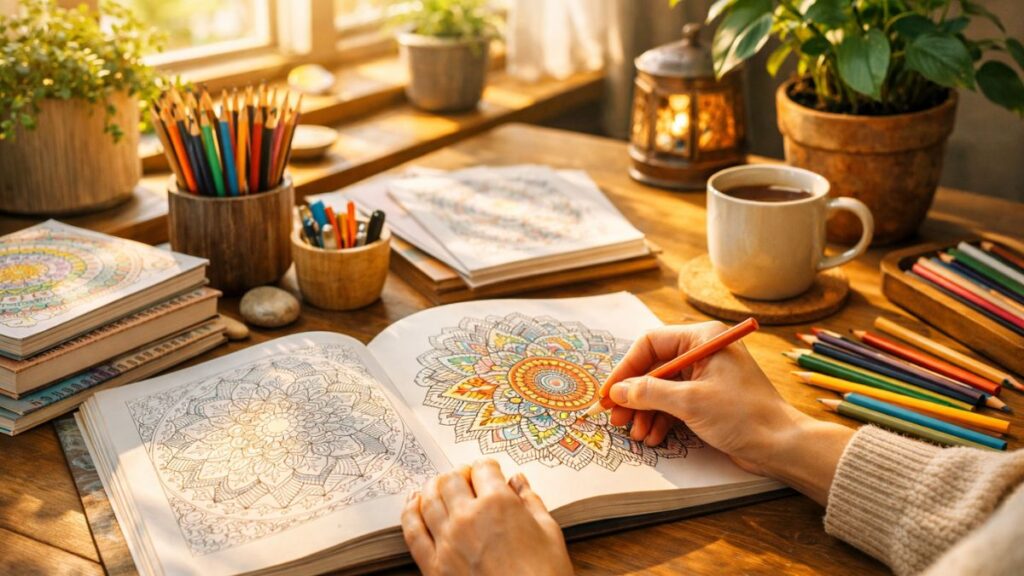
In today’s fast-paced world, finding simple ways to unwind is more important than ever. One surprisingly powerful method is happiness colouring—a creative activity that blends relaxation, mindfulness, and self-expression. Whether you’re using intricate mandalas or playful patterns, colouring can help calm your mind while boosting your mood.
Unlike complex hobbies, this practice requires no special skills. You just pick up your colors and begin. Over time, it becomes more than just a pastime—it turns into a therapeutic ritual that nurtures emotional well-being.
What Is Happiness Colouring?
Happiness colouring refers to the act of colouring with the intention of improving mood and mental clarity. It combines elements of art therapy and mindfulness.
Key Benefits at a Glance
| Benefit | How It Helps | Ideal For |
|---|---|---|
| Stress Relief | Lowers cortisol levels | Busy professionals |
| Mindfulness | Keeps you present | Overthinkers |
| Creativity Boost | Encourages expression | Artists & beginners |
| Emotional Balance | Reduces anxiety | Anyone feeling overwhelmed |
In simple terms, it’s a form of active meditation. As you focus on colors and patterns, your brain shifts away from stress.
Why Colouring Makes You Happier
The Science Behind It
Colouring activates the brain’s relaxation response. It engages both the logical and creative sides, creating a balanced mental state.
Emotional Benefits
- Reduces anxiety and racing thoughts
- Improves mood naturally
- Enhances focus and patience
Mental Reset Effect
When you colour, your mind slows down. This gives your brain a break from constant stimulation—something many people lack today.
Pagliaesque Thinking: Understanding a Bold Intellectual Style and Its Cultural Impact
Types of Happiness Colouring Pages
Different styles create different emotional effects. Choosing the right one can enhance your experience.
Popular Styles
| Type | Description | Best For |
|---|---|---|
| Mandalas | Circular patterns | Deep relaxation |
| Nature Scenes | Flowers, animals | Calmness |
| Abstract Designs | Free-flowing shapes | Creativity |
| Inspirational Art | Positive imagery | Motivation |
How to Choose the Right Style
- Feeling stressed? → Try mandalas
- Feeling bored? → Choose abstract designs
- Need motivation? → Go for uplifting visuals
How to Start Happiness Colouring
Getting started is simple, but a few tips can make the experience more enjoyable.
Step-by-Step Guide
- Choose a quiet space
- Pick a coloring page that suits your mood
- Select your colors intuitively
- Start slowly—no pressure
- Focus on the process, not the result
Tools You’ll Need
- Coloring books or printable pages
- Colored pencils, markers, or crayons
- A comfortable space
Best Colouring Techniques for Relaxation
1. Gradient Blending
Smooth transitions between colors create a calming effect.
2. Repetitive Patterns
Filling similar shapes repeatedly promotes mindfulness.
3. Color Psychology Use
Different colors influence emotions:
- Blue → calm
- Yellow → happiness
- Green → balance
- Purple → creativity
Colour Psychology and Mood Enhancement
Understanding colors can elevate your happiness colouring practice.
Color Impact Breakdown
| Color | Emotional Effect | When to Use |
|---|---|---|
| Blue | Calm and peace | Stress relief |
| Yellow | Joy and energy | Low mood |
| Green | Balance and harmony | Emotional reset |
| Red | Energy and passion | Motivation boost |
Using intentional color choices transforms colouring into a powerful emotional tool.
Pros and Cons of Happiness Colouring
Pros
- Easy and affordable
- No artistic skills required
- Helps reduce anxiety
- Improves focus and mindfulness
Cons
- Can feel repetitive for some
- Requires time consistency for benefits
- Limited stimulation for advanced artists
Common Mistakes to Avoid
Even simple activities can be less effective if done incorrectly.
Mistakes to Watch Out For
- Overthinking color choices
- Rushing through pages
- Focusing too much on perfection
- Using poor-quality materials
- Treating it like a task instead of relaxation
Best Practices for Maximum Benefits
To get the most out of happiness colouring, follow these proven strategies:
Daily Habit Tips
- Set aside 10–20 minutes daily
- Create a calming environment
- Play soft background music
- Use comfortable seating
Mindfulness Integration
- Focus on each stroke
- Breathe slowly while colouring
- Avoid distractions
Consistency Framework
| Practice Element | Recommendation | Result |
|---|---|---|
| Frequency | Daily or 3x/week | Better mood stability |
| Duration | 15–30 minutes | Deep relaxation |
| Environment | Quiet & cozy | Enhanced focus |
Practical Examples of Happiness Colouring
Example 1: After Work Relaxation
After a long day, spend 20 minutes colouring a mandala. This helps transition your mind from work stress to relaxation.
Example 2: Morning Mindfulness
Start your day with light colouring using bright tones like yellow and orange. It sets a positive tone.
Example 3: Digital Detox Routine
Replace screen time before bed with colouring. This improves sleep quality.
How Happiness Colouring Supports Mental Health
Colouring isn’t just a hobby—it’s a wellness tool.
Mental Health Benefits
- Reduces symptoms of anxiety
- Supports emotional processing
- Improves concentration
- Encourages self-expression
In many ways, it acts as a non-verbal therapy.
Conclusion
Happiness colouring is more than filling shapes with color—it’s a simple yet powerful way to reconnect with yourself. In a world full of distractions, it offers a quiet space for creativity, calm, and joy.
Whether you’re looking to reduce stress, boost your mood, or simply enjoy a mindful activity, this practice can make a meaningful difference. Start small, stay consistent, and most importantly—enjoy the process.
FAQs
1. What is happiness colouring?
Happiness colouring is a mindful activity where coloring is used to improve mood, reduce stress, and enhance relaxation.
2. Can colouring really reduce anxiety?
Yes, colouring helps calm the brain and shift focus away from stress, making it effective for anxiety relief.
3. How often should I practice colouring for benefits?
Even 15–20 minutes a day can significantly improve mood and mental clarity.
4. What are the best colours for relaxation?
Blue, green, and soft pastel shades are ideal for calming effects.
5. Do I need artistic skills to start?
No, colouring is accessible to everyone regardless of skill level.