
Introduction
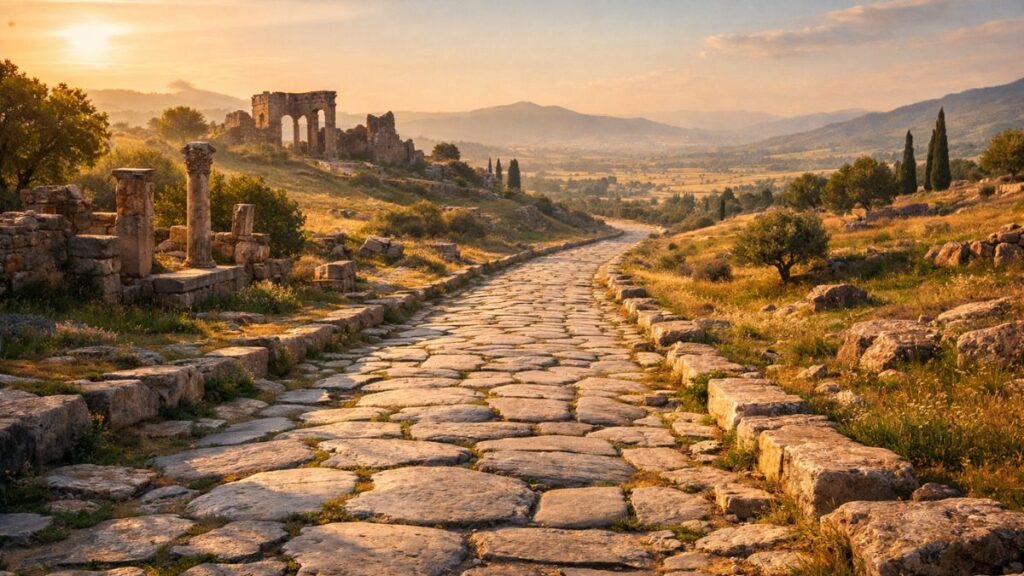
The term cesta roman refers to the ancient Roman roads that once connected vast parts of the Roman Empire. These roads were not just paths for travel—they were engineering masterpieces that shaped trade, communication, and military movement across Europe and beyond. Even today, remnants of these roads influence modern infrastructure and hiking routes.
In this article, we’ll explore what cesta roman really means, how these roads were built, why they mattered, and how they continue to inspire modern travel and culture.
What Is Cesta Roman?
A cesta roman (Roman road) is a carefully engineered roadway constructed by ancient Romans to connect cities, military camps, and trade routes across their empire.
Key Characteristics
- Built with multiple layers of materials
- Designed for durability and drainage
- Often straight, even across difficult terrain
- Used for military, trade, and communication
These roads were so well-constructed that many are still visible today, proving their long-lasting impact.
History of Roman Roads
Early Development
Roman road construction began around 312 BCE with the famous Via Appia. Over time, the network expanded rapidly.
Expansion Across the Empire
The Romans built over 250,000 miles of roads, connecting regions across:
- Europe
- North Africa
- The Middle East
Purpose of Cesta Roman
- Military troop movement
- Trade and commerce
- Communication between cities
UA82 Emergency: What It Means, Causes, and How to Respond Effectively
How Roman Roads Were Built
Roman engineers followed a systematic approach to ensure durability and efficiency.
Construction Layers
| Layer Name | Material Used | Purpose |
|---|---|---|
| Statumen | Large stones | Foundation support |
| Rudus | Gravel and mortar | Stability |
| Nucleus | Sand and fine gravel | Smooth surface |
| Summum Dorsum | Paving stones | Final road surface |
These layers made cesta roman incredibly strong and resistant to weather damage.
Why Cesta Roman Was So Important
Roman roads were essential for maintaining control over the empire.
Key Benefits
- Faster military response
- Efficient trade routes
- Cultural exchange between regions
- Economic growth
Example
A soldier could travel nearly 20–30 miles per day on a Roman road—remarkably fast for that time.
Modern Influence of Cesta Roman
Even today, the legacy of Roman roads is visible.
Infrastructure Impact
- Many European highways follow ancient Roman routes
- Engineering techniques still inspire modern road construction
Tourism and Travel
- Popular hiking routes follow old Roman paths
- Historical tourism sites attract millions annually
Comparison: Roman Roads vs Modern Roads
| Feature | Roman Roads | Modern Roads |
|---|---|---|
| Materials | Stone and gravel | Asphalt and concrete |
| Durability | Extremely long-lasting | Requires maintenance |
| Design | Straight and direct | Flexible and adaptive |
| Technology | Manual engineering | Advanced machinery |
Practical Uses of Cesta Roman Today
Hiking and Adventure
Many travelers explore ancient Roman routes as part of cultural hiking experiences.
Education
Historians and engineers study Roman roads to understand ancient innovation.
Urban Planning Inspiration
City planners still draw ideas from Roman road systems.
Pros and Cons of Cesta Roman
Pros
- Exceptional durability
- Efficient design
- Historical significance
- Minimal maintenance
Cons
- Limited flexibility in design
- Labor-intensive construction
- Not suitable for modern traffic loads
Common Mistakes When Understanding Cesta Roman
Many people misunderstand the concept of Roman roads. Here are common mistakes:
- Assuming they were simple dirt paths
- Ignoring their advanced engineering
- Overlooking their economic impact
- Thinking they were only used for military purposes
Best Practices for Exploring Roman Roads
If you plan to explore a cesta roman today, keep these tips in mind:
Preparation
- Wear comfortable walking shoes
- Bring water and navigation tools
Research
- Learn about the historical significance of the route
- Check local guides or maps
Respect the Site
- Avoid damaging ancient structures
- Follow local preservation rules
Strategic Breakdown of Roman Road Success
| Strategy | Description | Impact |
|---|---|---|
| Standardized Design | Uniform construction methods | Consistent quality |
| Strategic Planning | Direct routes between key locations | Faster travel |
| Durable Materials | Multi-layered construction | Longevity |
| Maintenance System | Regular upkeep by officials | Sustained usability |
Conclusion
The concept of cesta roman goes far beyond simple roads—it represents one of the greatest engineering achievements in history. These roads connected an empire, facilitated trade, and influenced modern infrastructure in ways that still matter today.
Whether you’re a history enthusiast, traveler, or curious learner, understanding Roman roads offers valuable insight into how ancient innovation continues to shape the modern world.
FAQs
1. What does cesta roman mean?
It refers to ancient Roman roads built for transportation, trade, and military purposes.
2. Why were Roman roads so durable?
They used multiple construction layers and high-quality materials, ensuring long-lasting strength.
3. Are Roman roads still used today?
Some are still visible and even used as walking paths or foundations for modern roads.
4. How long were Roman roads?
The Roman road network stretched over 250,000 miles across the empire.
5. Can you visit Roman roads?
Yes, many Roman roads are preserved and open to tourists, especially in Europe.